Meet Our Fellows
Dedicated researchers driving innovative solutions for climate resilience across Africa

Akinyi J. Eurallyah, PhD
Research Associate and Manager, ARIN Fellowship Programme - Climate Change and Finance
Akinyi holds a PhD in Law, and an LLM in International Trade and Investment Law in Africa. She is an Advocate of the High Court of Kenya and a policy specialist with over eight years of experience working at the intersection of sovereign debt management, climate finance, sustainable development, international economic governance, and just transitions in Africa. At ARIN, she serves in multiple leadership and research capacities, including as Fellowship Manager and Senior Research Associate, where she has leads and supports interdisciplinary research programmes, policy engagement processes, capacity strengthening initiatives, and multi-country projects across Africa. Her work focuses on sovereign debt justice, climate finance, just energy transitions, global financial architecture reform, critical minerals governance, climate-health financing, and evidence-informed policymaking. She possesses expertise in policy research and analysis, programme and project management, stakeholder engagement, advocacy, capacity building, and the coordination of multi-stakeholder partnerships involving governments, academia, civil society, and development partners. Throughout her career, Akinyi has contributed to major research and policy initiatives funded by various institutions including IDRC, FCDO, UKRI, the British Academy, and DANIDA. Her work has included projects on operationalising just energy transitions in Africa, the political economy of NDC financing, climate-health financing, strengthening evidenceinformed policymaking in Africa, carbon markets governance, and sovereign debt and critical minerals in Africa. She has also contributed to policy dialogues involving various intergovernmental organisations and regional parliamentary and civil society institutions. Her research and professional interests include sovereign debt, climate justice, just transitions, climate and health financing, sustainable energy transitions, international economic law, and transformative development policy in Africa. Her publications and technical outputs on these topical areas demonstrate a strong commitment to advancing equitable, sustainable, and African-led approaches to development and global economic governance.

Dr. Mary Nantongo
REGIONAL FOCAL POINT - EAST AFRICA
Dr. Mary Nantongo is a lecturer at the Department of Economics, Makerere University Business School. She is a postdoctoral fellow on the 'Capacity Building for Socially Just and Sustainable Energy Transitions' project, where her research focuses on asset and resource stranding as a consequence of the transition to a low carbon economy in Uganda. Mary is also a certified expert in Applied Development Finance by the European Investment Bank and Global Development Network as well as a certified expert in Financing Nationally Determined Contributions of the Paris Climate Agreement by the Frankfurt School of Finance and Management. She is also a member of the Network for Impact Evaluation Researchers in Africa. For this year, 2022, Mary is a member of the scientific committee for the organization of the annual conference on renewable energy organized by the Ministry of Energy and Mineral Development, Uganda. Mary holds a PhD in Development and Environment Studies (Institutional Economics) and an MSc. in Development and Natural Resource Economics from the Norwegian University of Life Sciences. Her research interests revolve around the analysis of social, economic and environmental impacts of climate change, as well as evaluations of policies, programs and investments in the fields of environment and climate and the interactions and interdependencies between these and the broad sectors of agriculture, energy and natural resources.

Dr Albert A. Arhin
REGIONAL FOCAL POINT - WEST AFRICA
Dr Albert A. Arhin is a Research Fellow at the Bureau of Integrated Rural Development, Kwame Nkrumah University of Science and Technology (KNUST), Ghana. He is a development and sustainability scholar with expertise in rural development, climate change, climate finance, sustainability, and monitoring and evaluation. He holds a PhD in Geography from the University of Cambridge and has over 15 years of experience in research, teaching, policy analysis, evaluation, and development practice. His work focuses particularly on climate resilience, sustainable rural livelihoods, cocoa-sector sustainability, gender-responsive adaptation, and evidence-informed approaches to inclusive rural transformation in Africa.
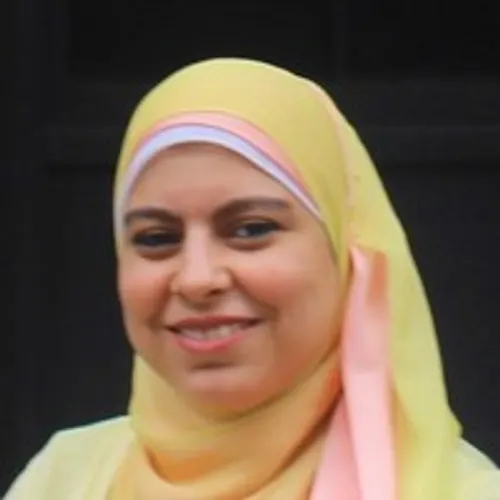
Dr. Merham Keleg
REGIONAL FOCAL POINT - NORTH AFRICA
Merham Keleg is Assistant Professor of Urban Design and Planning at Ain Shams University. She is Trustee and Research Coordinator of the Landscape Research Group and Associate Editor of Landscape Research Journal. Since 2025, she has served as the African Research and Impact Network (ARIN) Focal Point for North Africa and was awarded the 2025 ARIN–UCL Accountable Adaptation Research Mini-Grant. Her research focuses on placemaking, green infrastructure, and landscape governance in under-studied urban contexts, particularly in Cairo and across Africa. Her work explores participatory climate action, people–nature relationships, and public space, with a focus on connecting communities, landscapes, and policy in rapidly transforming cities.
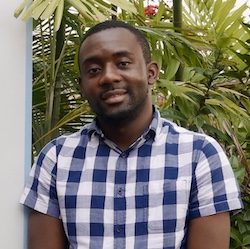
Dr. Tamuka Chekero
REGIONAL FOCAL POINT - SOUTH AFRICA
Biography coming soon.
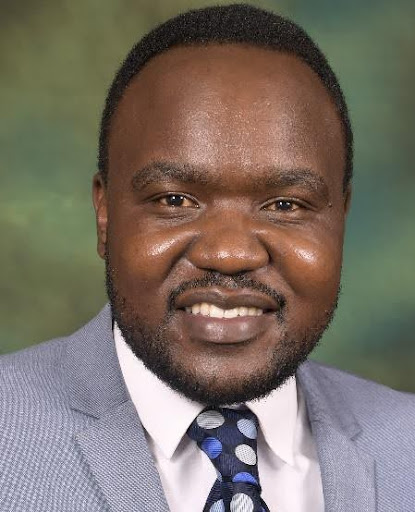
Jim Oduor
DEPUTY REGIONAL FOCAL POINT - EAST AFRICA
Jim Oduor is a climate change adaptation and city resilience specialist who brings rigorous social research to the frontlines of Africa's development challenges. Across international development, M&E, and evidence-informed decision-making, Jim turns complex fieldwork into insight that shapes policy and practice. Jim designs and leads research on climate adaptation, food security to environmental justice, disaster preparedness, and gender equality. He's led research end-to-end spanning from designing methods and tools, training and managing field teams, running surveys and focus groups, and driving data from raw collection through to sharp, decision-ready analysis. His Environmental, Gender, and Social Impact Assessments (GESIA) work reflects the same instinct; translating evidence into action that holds up on the ground.
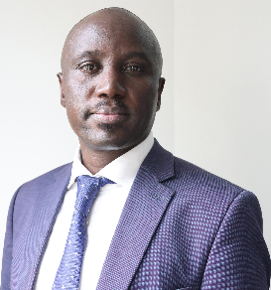
Paul Byamugisha
Paul Byamugisha is a PhD Candidate in Climate Change and Sustainable Development at the University of Dar es Salaam, with over 15 years of experience in banking, development finance and climate finance. He holds an MSc in Development Finance from the University of Ghana and an MA in Financial Services from Makerere University. He is currently a consultant with UNIDO as an Energy and Climate Finance Expert, supporting GCF, Adaptation Fund and GEF project pipeline development, grounded in proposal structuring and financial modelling. His research focuses on innovative financing mechanisms, particularly green bonds for climate adaptation in Uganda and Kenya. He has worked with governments, UN agencies, MDBs, DFIs, challenge funds, and the private sector in resource mobilization to tackle climate change in the region.
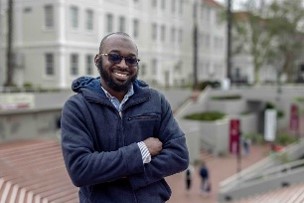
Sani Saidu Muhammad
Sani Saidu Muhammad is a researcher and development practitioner whose work spans climate finance, climate adaptation, development economics, and public policy. He is a PhD researcher at Ahmadu Bello University, Nigeria, focusing on technology, governance, and community intelligence for climate adaptation and resilience. His research interests include climate finance, locally led adaptation, climate governance, digital technologies, and evidence-informed policy in Africa. He works across research and development practice to examine how finance, knowledge, and technology can strengthen inclusive and climate-resilient development, particularly in vulnerable and underserved communities.

Esther Appah
Esther Appah is a climate researcher focused on water scarcity, gender, and livelihoods. She is an MPhil researcher in Informatics for Climate Change at the West African Science Service Center on Climate Change and Adapted Land Use (WASCAL), University Joseph Ki-Zerbo. Her work combines geospatial and climate informatics methods, such as climate disaster risk profiling and precipitation trend analysis, with qualitative research on gender, natural resource access, and social inclusion. Her career is dedicated to advancing evidence-based approaches to gender-responsive climate resilience, tracing how climate-induced water scarcity reconfigures gendered vulnerability, adaptive capacity, and livelihood strategies.
Dr. Owen Mafongoya
Owen Mafongoya is a social scientist, an academic and senior lecturer at Great Zimbabwe University. He holds BSc Hons in Sociology and MSc in Sociology and Social Anthropology from the University of Zimbabwe. He is also a holder of PhD in Agricultural Extension and Rural Resource Management from the University of KwaZulu-Natal, Republic of South Africa. His areas of focus and interests are on IKS, Climate change vulnerability, resilience and anticipatory action to disasters (AA) and DRR. He is also a consultant who have worked with government line departments and NGOs.
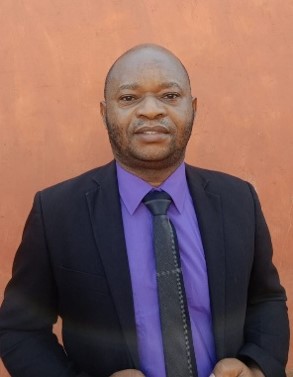
Frank George Mgungwe
Frank George Mgungwe is a legal scholar with a concentration in human rights law and transformative development. He combines these as lens for studying African Indigenous Knowledge System (AIKS). His research spans women's empowerment, youth justice, rural development, and the intersection of traditional knowledge and sustainability. He advances community-driven development and social justice in Africa through transformative policy-focused research. Aside from teaching human rights law and development at the University of Livingstonia, Malawi, he also engages in development initiatives addressing climate change, human rights, and gender equity.
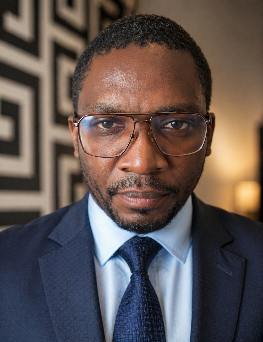
Nuwahereza Nelson
Nuwahereza Nelson is a Climate Governance Specialist, Director of the Mandera Climate Resilience Institute (CRIM), and Research Fellow at the Africa Research and Impact Network (ARIN). He has over eight years of experience in climate policy, climate finance, environmental governance, REDD+, carbon markets and climate adaptation. He previously worked with Uganda's National REDD+ Secretariat and the UNFCCC Secretariat's Adaptation Division. Nelson is a PhD Candidate in Environmental Management and Control at the University of Nigeria, Nsukka. His research focuses on climate adaptation governance, climate finance, NDC implementation, nature-based climate Action and Africa's adaptation self-reliance.
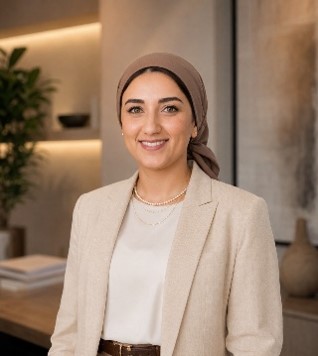
Eman El Garhy
Eman El Garhy is the Founder & CEO of Ecothentic Sustainability Consultancy. With 17 years of experience, she specialises in sustainable development, green buildings, the green transition and sustainability strategies across the MENA region. She is an IFC EDGE Expert and has worked with international and national financial institutions, including the World Bank and the National Bank of Egypt, supporting green finance and sustainable investment. Eman holds a Master's degree in Architecture Engineering from Cairo University and brings a multidisciplinary perspective connecting the built environment, private-sector development and climate action. Her work focuses on translating sustainability objectives into practical solutions supporting the green transition.
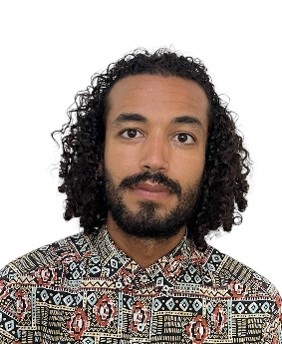
Anas Mghar
Anas Mghar is a PHD researcher at the Department of Law, Economics, Politics and Languages at LUMSA University (Rome, Italy) and Department of Land Resource Management and Environmental Protection, Mekelle University (Tigray, Ethiopia). Anas's research interests are climate adaptation governance, environmental justice, and accountability mechanisms in fragile and conflict affected situations in Sub-Saharan Africa.
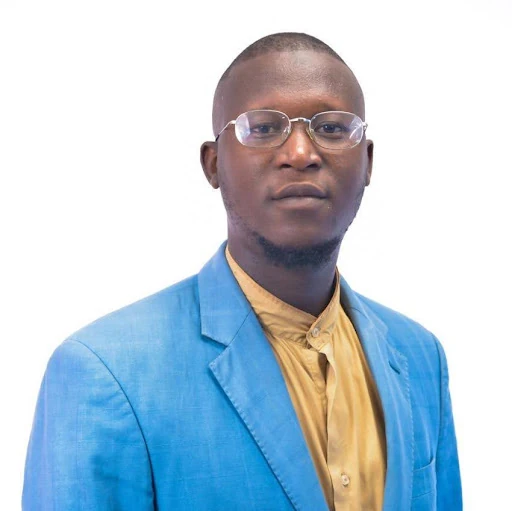
Vayanga DONZO
Vayanga DONZO is a Guinean environmental researcher and development practitioner specializing in climate governance, sustainable development, climate finance, and community resilience. He is an Executive Director of the Association des Jeunes Dynamiques pour le Développement Durable (AJD-DD) and has extensive experience working with communities and civil society organizations on climate action, ecosystem restoration, sustainable natural resource management, and locally led development. As a researcher and consultant, he has contributed to analytical work on the Sustainable Development Goals (SDGs), climate-smart agriculture, and the links between climate change, livelihoods, and resilience in Africa. He also contributed as a researcher and co-author to the African Climate Finance Outlook work coordinated by ARIN, including the analysis of the BEAC Green Window Initiative in the CEMAC Region, examining its opportunities, challenges and potential contribution to strengthening regional climate finance and sustainable investment in Central Africa.

Washington Kanyangi
Research Associate - Disaster Risk Management
Washington O. Kanyangi is a Programme Manager with over 6 years of experience in climate change adaptation, Climate Justice, resilience programming, and evidence-informed policy engagements at the Regional, national, and Local levels. At the Africa Research and Impact Network (ARIN), he serves as a Research Associate, where he coordinates multi-country research initiatives, supports programme implementation, facilitates stakeholder engagement, resource mobilization efforts and contributes to the development of knowledge products. His work spans climate finance, adaptation systems, urban resilience, loss and damage, and air quality governance in African cities. He brings strong expertise in research design, programme coordination, qualitative analysis, stakeholder engagement strategies, and translating evidence into practical recommendations for policy and adaptation investment decisions. Washington is currently pursuing a Master of Environmental Studies in Climate Change and Sustainability at Kenyatta University and holds a Bachelor's degree in Disaster Management and International Diplomacy from Masinde Muliro University of Science and Technology. He has also completed professional training in climate governance and negotiations, science communication, nature-based solutions for disaster and climate resilience, global diplomacy, and international women's health and human rights. Throughout his career, Washington has contributed to several regional and continental initiatives, including Political Economy of NDC Financing in Africa; Assessing the effectiveness of climate change Adaptation Interventions in East Africa; Loss and Damage; and Regional Dialogues on Bridging the Climate Finance Gap in Africa. His professional interests centre on strengthening adaptation systems through participatory approaches, advancing inclusive climate financing mechanisms, and supporting the use of evidence to shape resilient and sustainable development in diverse African contexts. Selected publications and projects include (insert key publications/projects where applicable). 1. Kanyangi, W., Atela, J., Mwaniki, G., Randa, T., Agevi, H., Akinyi, E., (2025). Political economy of the air quality management of Nairobi city. 2. Atela, J., Kanyangi, W., Agevi, H., Nantongo, M., & Onyango, F. (2025). Assessing the effectiveness of climate adaptation interventions in East Africa (Report No. 19). Africa Research and Impact Network. 3. Aleksandrova, M., Kanyangi, W. O., Atchadé, A. J., Atela, J., & Tonui, C. (2025). Allocating international loss and damage finance through national climate funds: Prospects for African LDCs. 4. Figueroa-Arango, C., Svensson, A., Mundoli, S., Nagendra, H., Sitas, N., Aoko, L., Carrillo, D., Caicedo, J. R., Cruz, R., Gordon, C., Gonzalez, D., Jaja, Z., Kanyangi, W., Murillo-Morales, S. V., Oyola, S., Lloret, P., Melo, I., Mendez, H., Rahal, L., Ruiz, D., Sachica, M. S., & Zavala, P. (2024). Integrating nature-based solutions in cities from the Global South. 5. Contributing author: Africa Research and Impact Network. (2025). Africa State of Evidence Report – 2024: A Focus on Climate and Health (Report No. 13)

George Masila
Graphics & Comms Officer
George Masila is a creative communications expert and project manager with 10 years' experience in the media and communication industry. George has so far implemented over 15 development projects by a wide range of partners including donors, government, private sector, development agencies, academia, and the media. He has experience working in multinational projects across Kenya, Uganda, Tanzania, South Africa, Nigeria, and Zambia.