← Back to Home
Friday Reviews
Weekly and monthly research reviews, briefs, and publications from African scholars and policy makers sharing their findings and insights.
About Friday Reviews
ARIN organizes weekly and monthly research reviews where African scholars and policy makers share their findings with reviewers and peers. The reviews are carried out virtually and provide access to peer learning on research gaps and needs.
Expected Outputs
Showing 1–12 of 52
Latest first
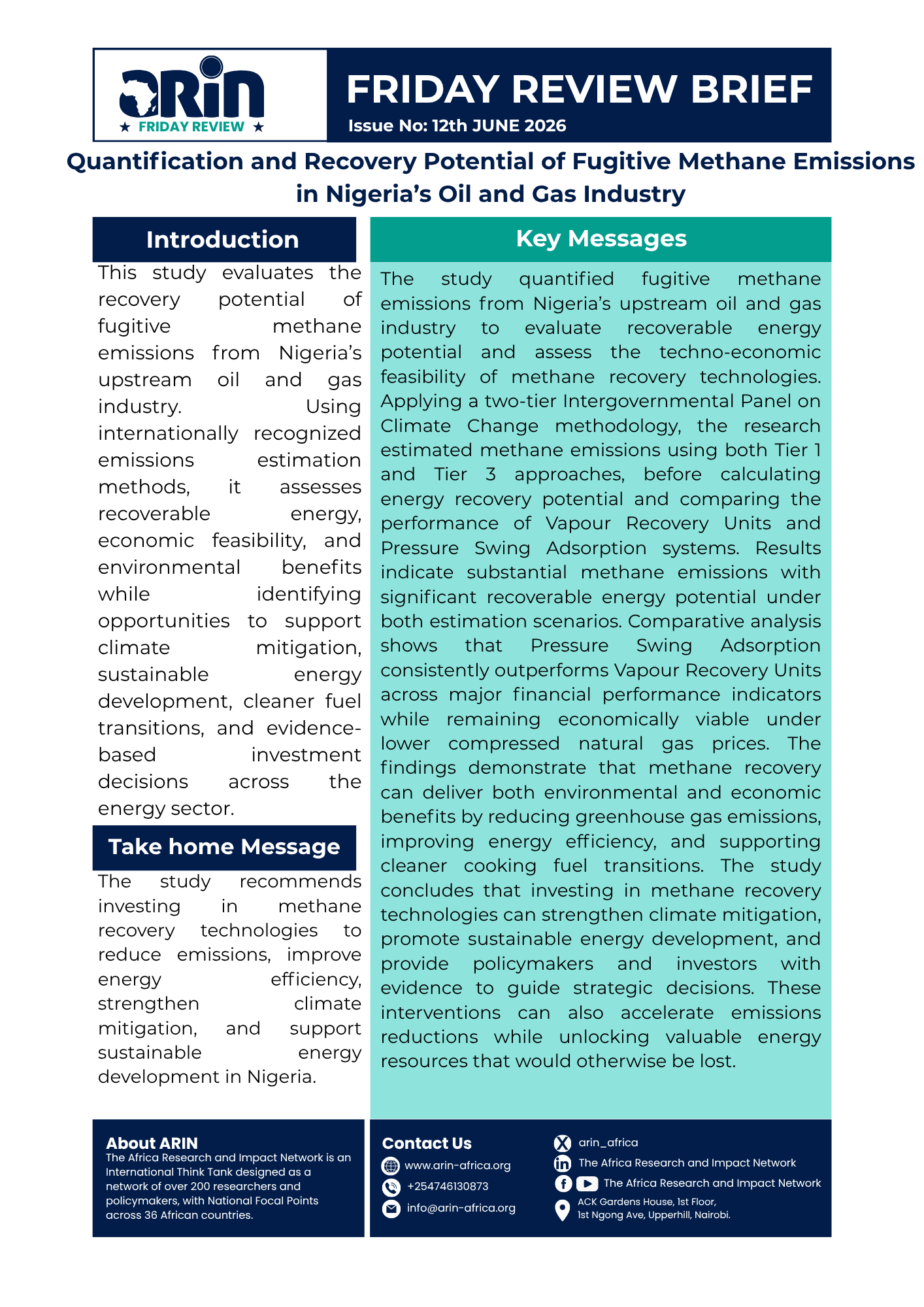
Quantification and Recovery Potential of Fugitive Methane Emissions in Nigeria's Oil and Gas Industry
Evaluates the recovery potential of fugitive methane emissions from Nigeria's upstream oil and gas industry, demonstrating the techno-economic feasibility of methane recovery technologies to reduce emissions and support cleaner energy transitions.
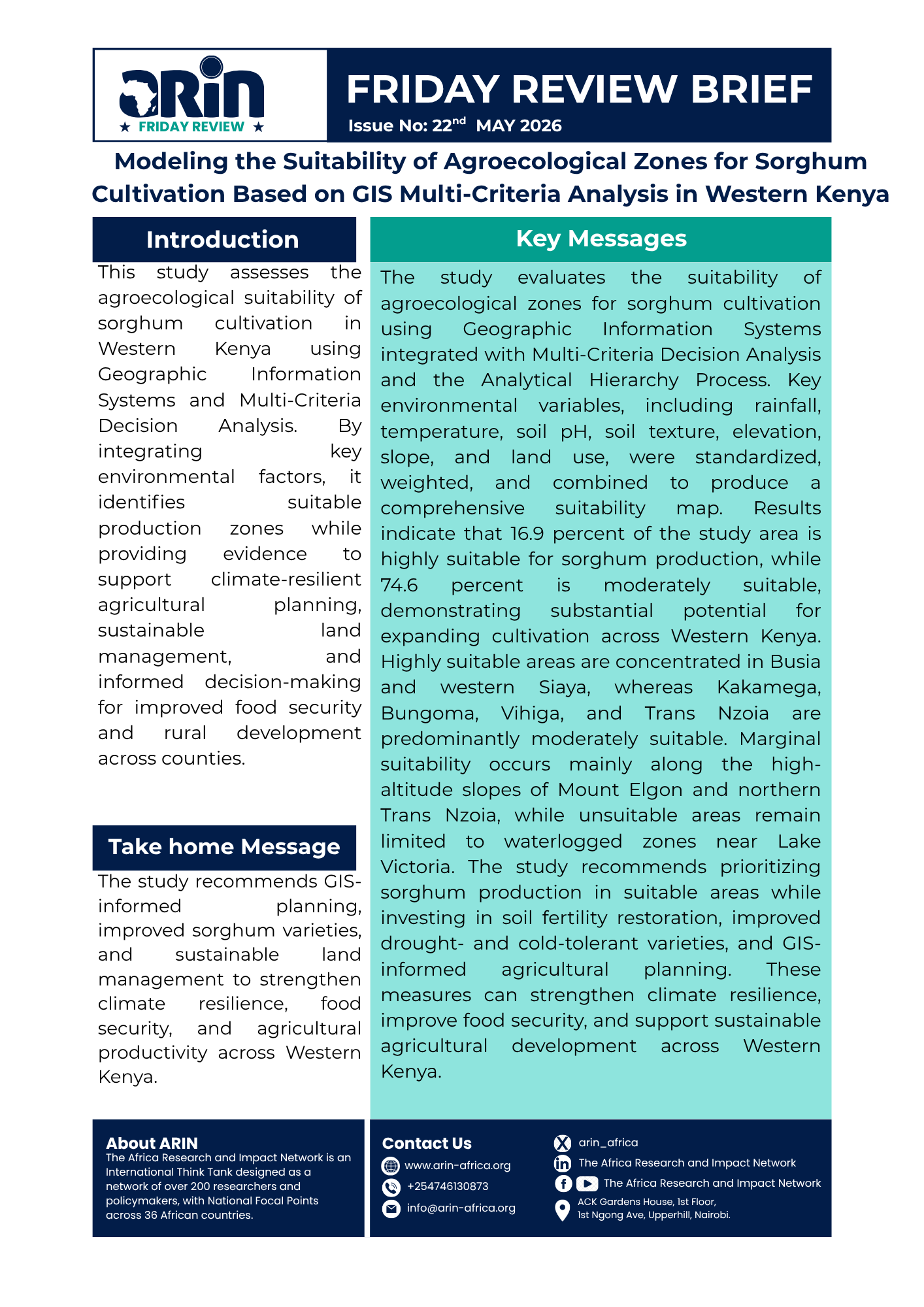
Modelling the Suitability of Agroecological Zones for Sorghum Cultivation Based on GIS Multi-Criteria Analysis in Western Kenya
Assesses the agroecological suitability of sorghum cultivation in Western Kenya using GIS-integrated Multi-Criteria Decision Analysis, finding 16.9% highly suitable and 74.6% moderately suitable land for climate-resilient food production.
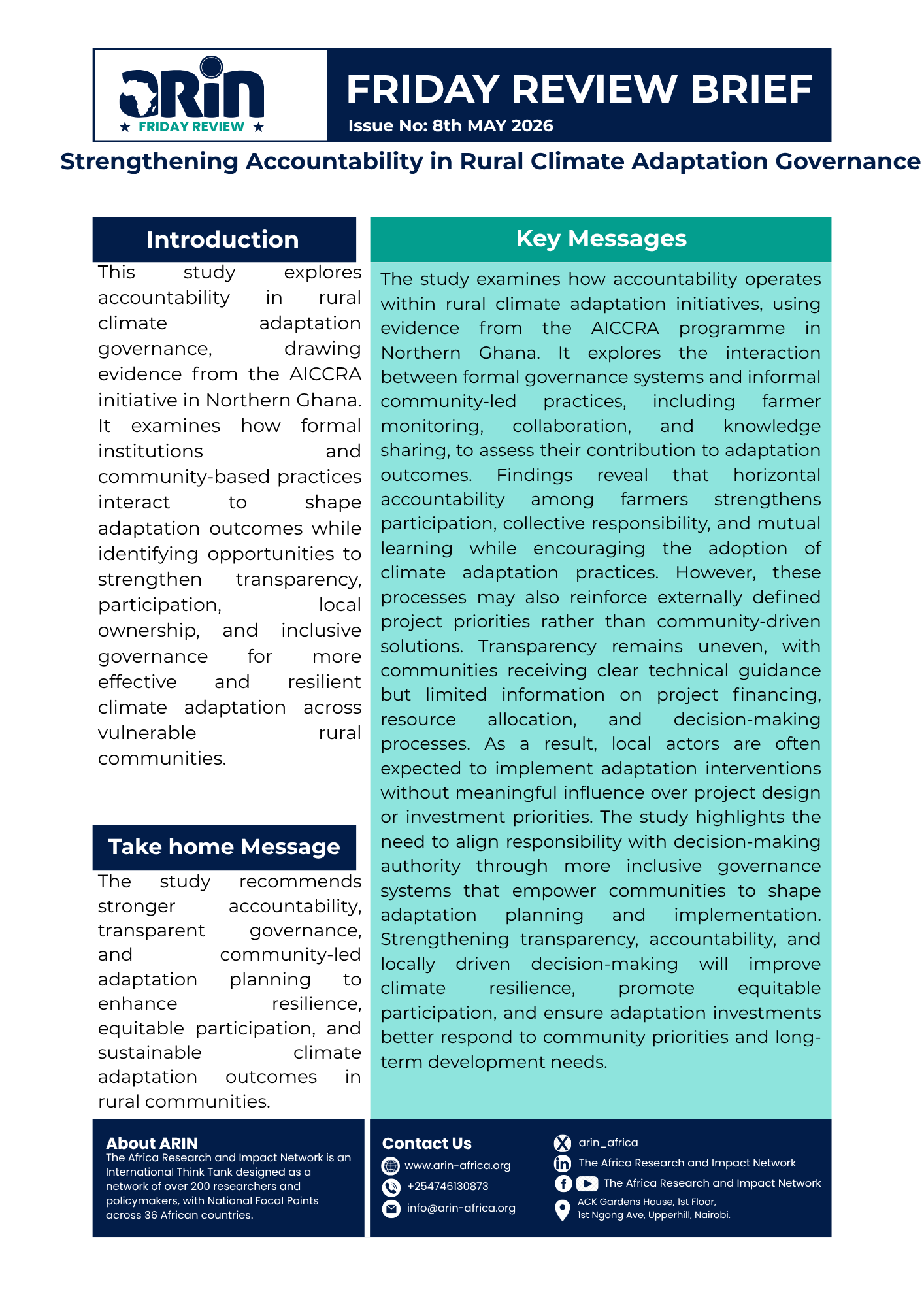
Strengthening Accountability in Rural Climate Adaptation Governance
Examines how accountability operates within rural climate adaptation initiatives using evidence from the AICCRA programme in Northern Ghana, finding that horizontal farmer accountability and inclusive governance improve adaptation outcomes.
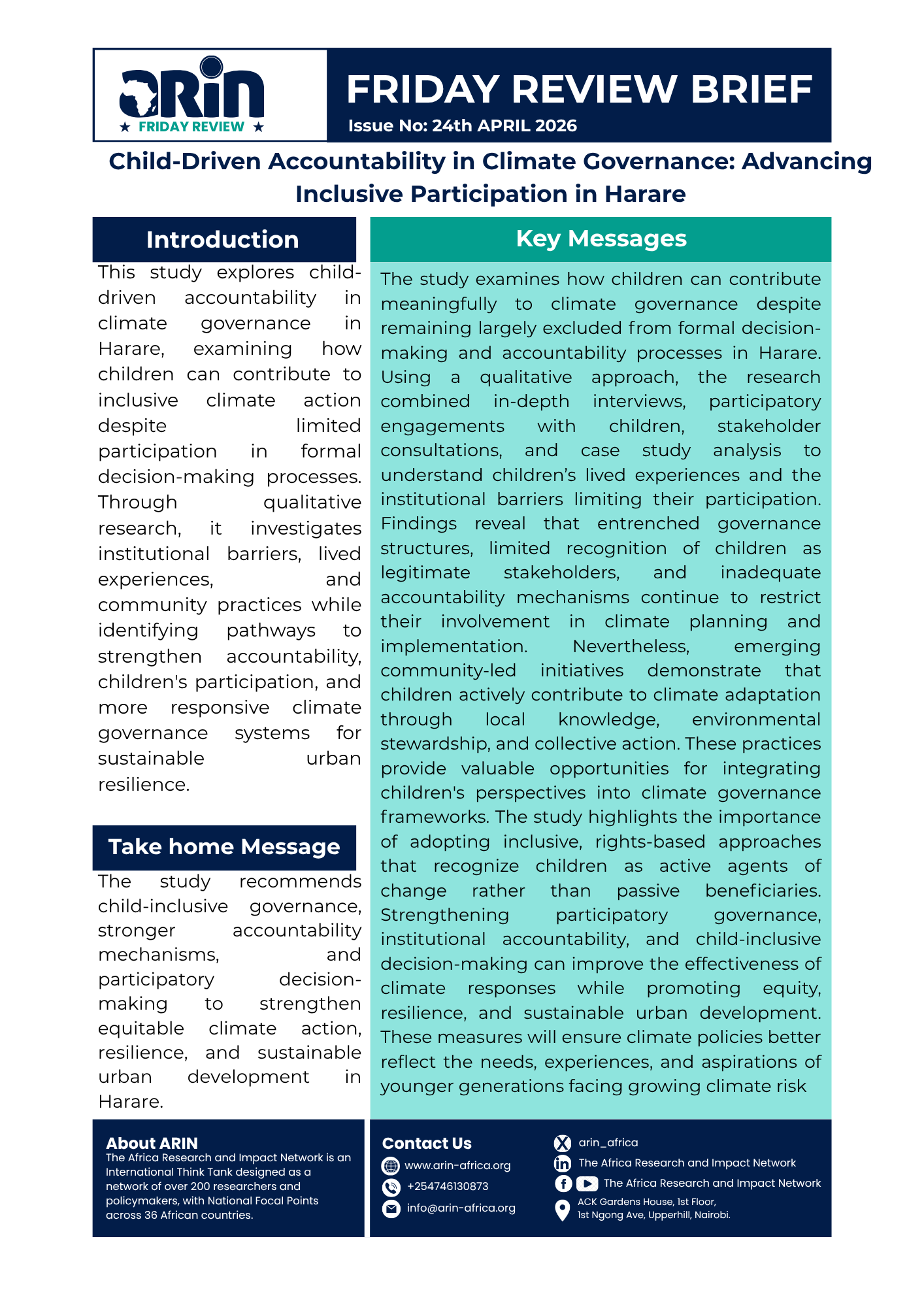
Child-Driven Accountability in Climate Governance: Advancing Inclusive Decision-Making in Harare
Explores how children actively contribute to climate governance in Harare through local knowledge, environmental stewardship, and collective action, despite being largely excluded from formal decision-making and accountability processes.
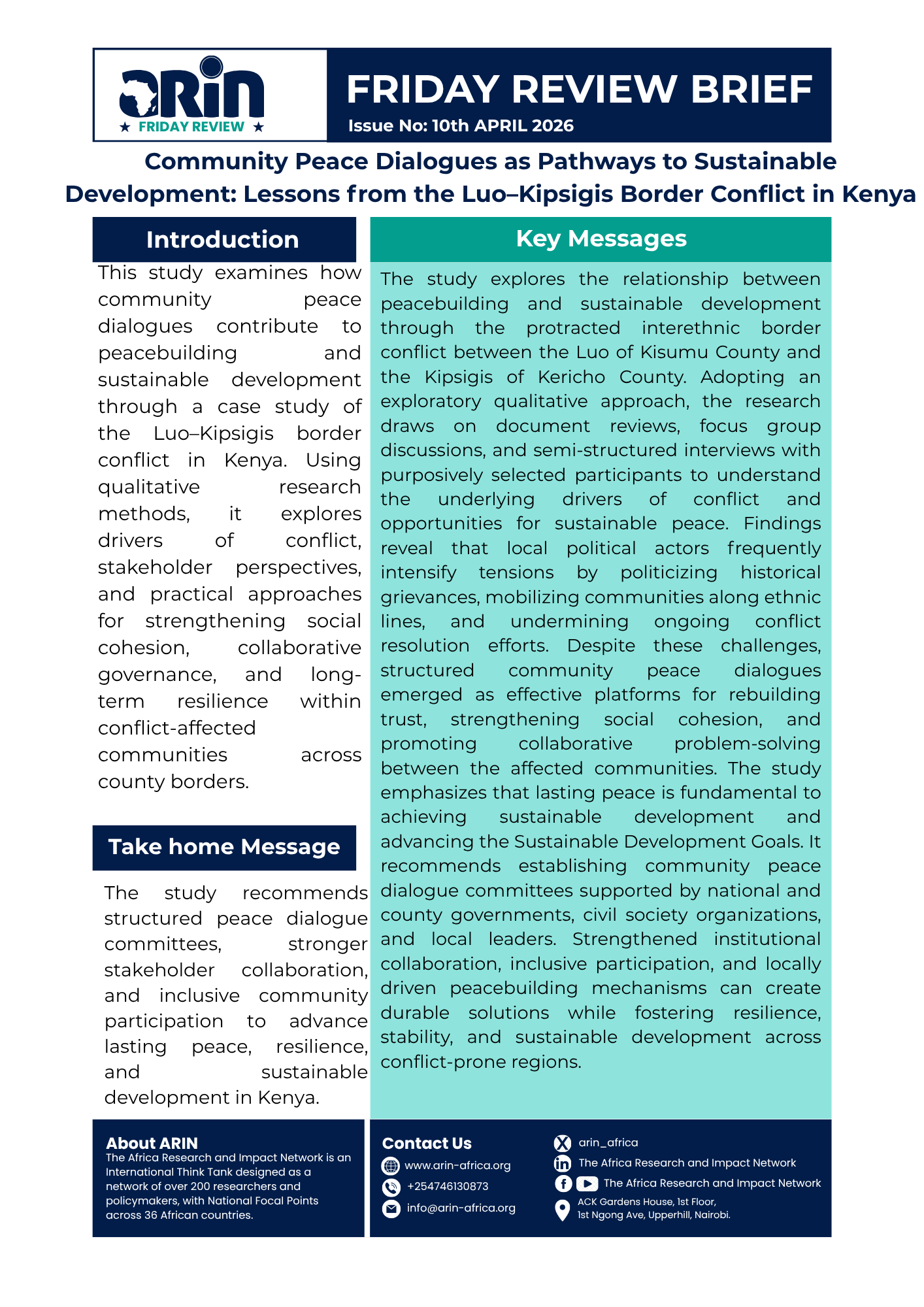
Community Peace Dialogues as Pathways to Sustainable Development: Lessons from the Luo–Kipsigis Border Conflict in Kenya
Explores how community peace dialogues contribute to peacebuilding and sustainable development in the protracted Luo–Kipsigis border conflict, identifying dialogue committees as critical platforms for rebuilding trust and social cohesion.
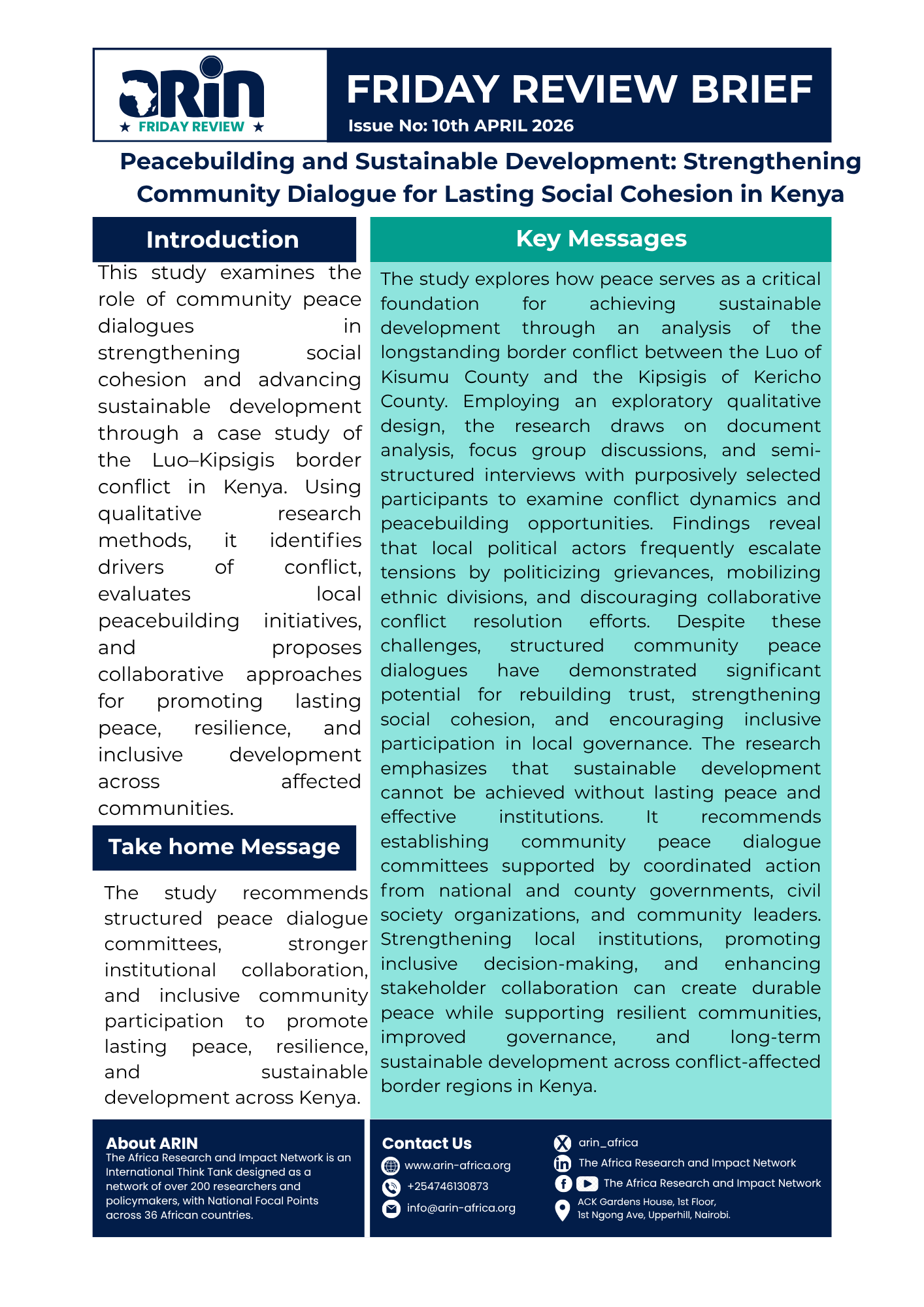
Peacebuilding and Sustainable Development: Strengthening Community Dialogue for Lasting Social Cohesion in Kenya
Examines how structured community peace dialogue committees supported by coordinated stakeholder action create durable solutions to the Luo–Kipsigis border conflict, promoting resilient governance and long-term sustainable development.
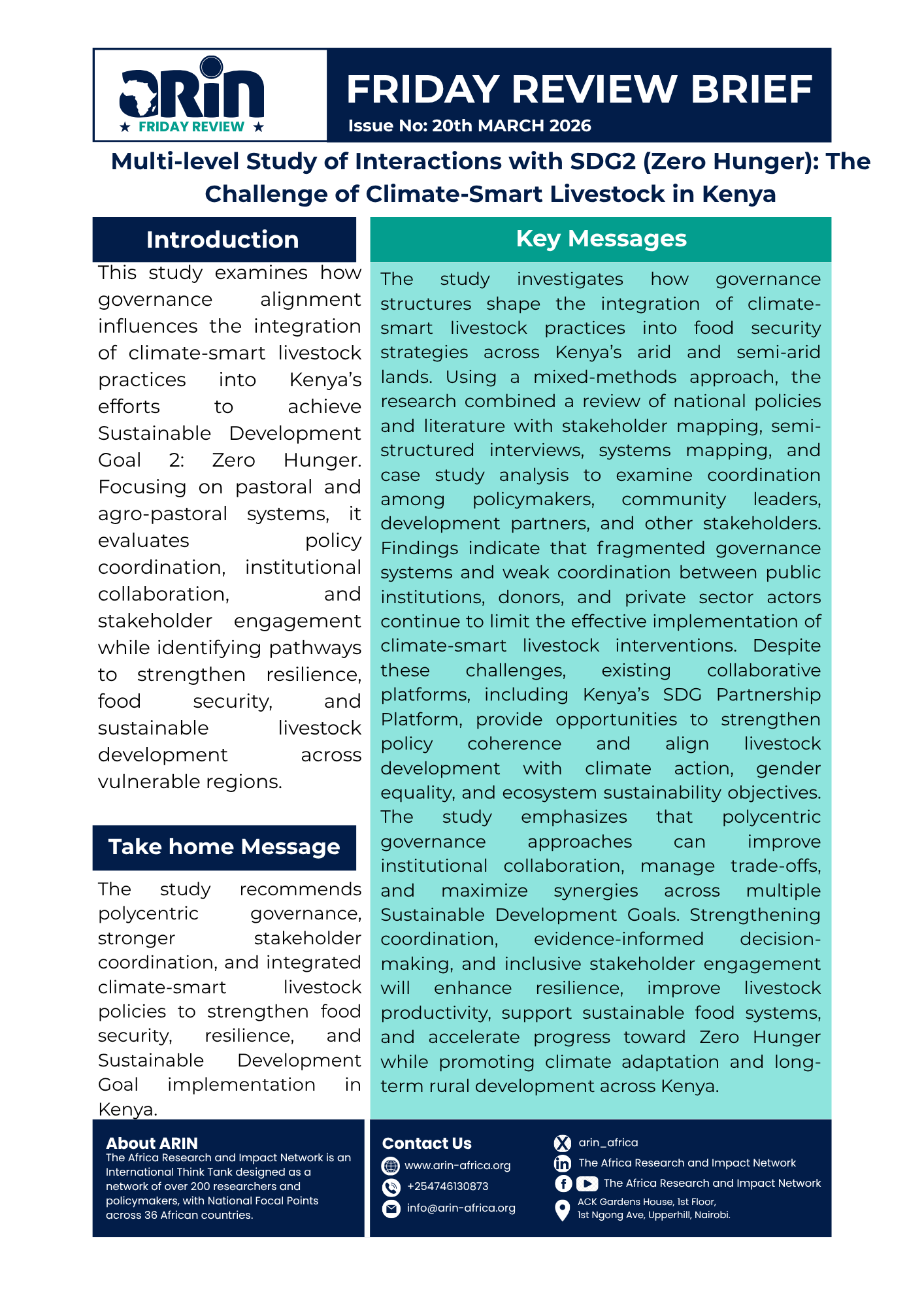
Multi-level Study of Interactions with SDG2 (Zero Hunger): The Challenge of Climate-Smart Livestock in Kenya
Examines how governance alignment influences climate-smart livestock integration into Kenya's food security strategies, recommending polycentric governance to manage SDG trade-offs and strengthen policy coherence across arid regions.
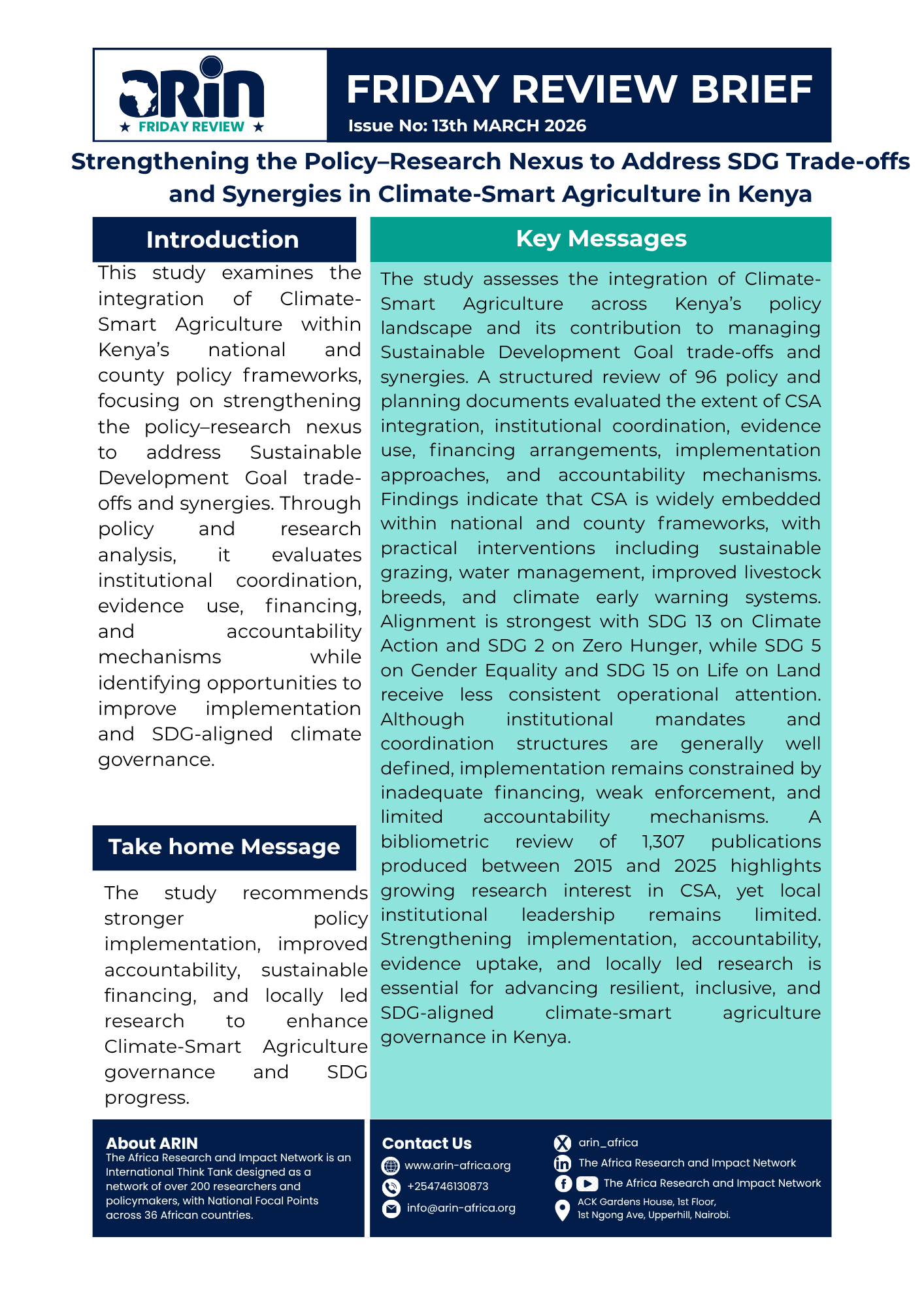
Strengthening the Policy–Research Nexus to Address SDG Trade-offs and Synergies in Climate-Smart Agriculture in Kenya
Assesses the integration of Climate-Smart Agriculture within Kenya's national and county policy frameworks, finding strong alignment with SDG 13 and SDG 2 but persistent implementation gaps requiring stronger accountability and institutional coordination.
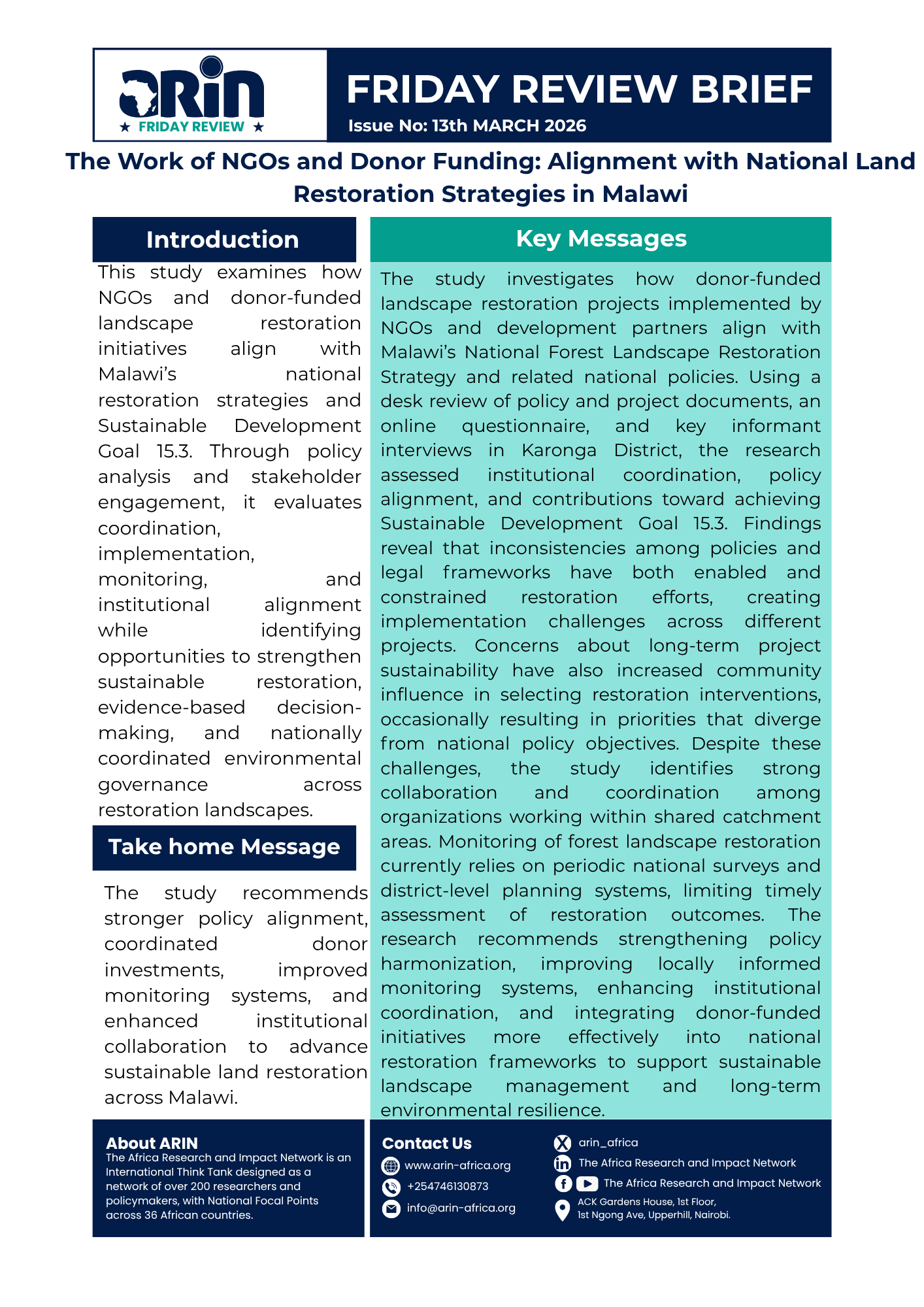
The Work of NGOs and Donor Funding: Alignment with National Land Restoration Strategies in Malawi
Investigates how donor-funded NGO landscape restoration initiatives align with Malawi's National Forest Landscape Restoration Strategy, recommending stronger policy alignment, improved monitoring, and enhanced institutional coordination.
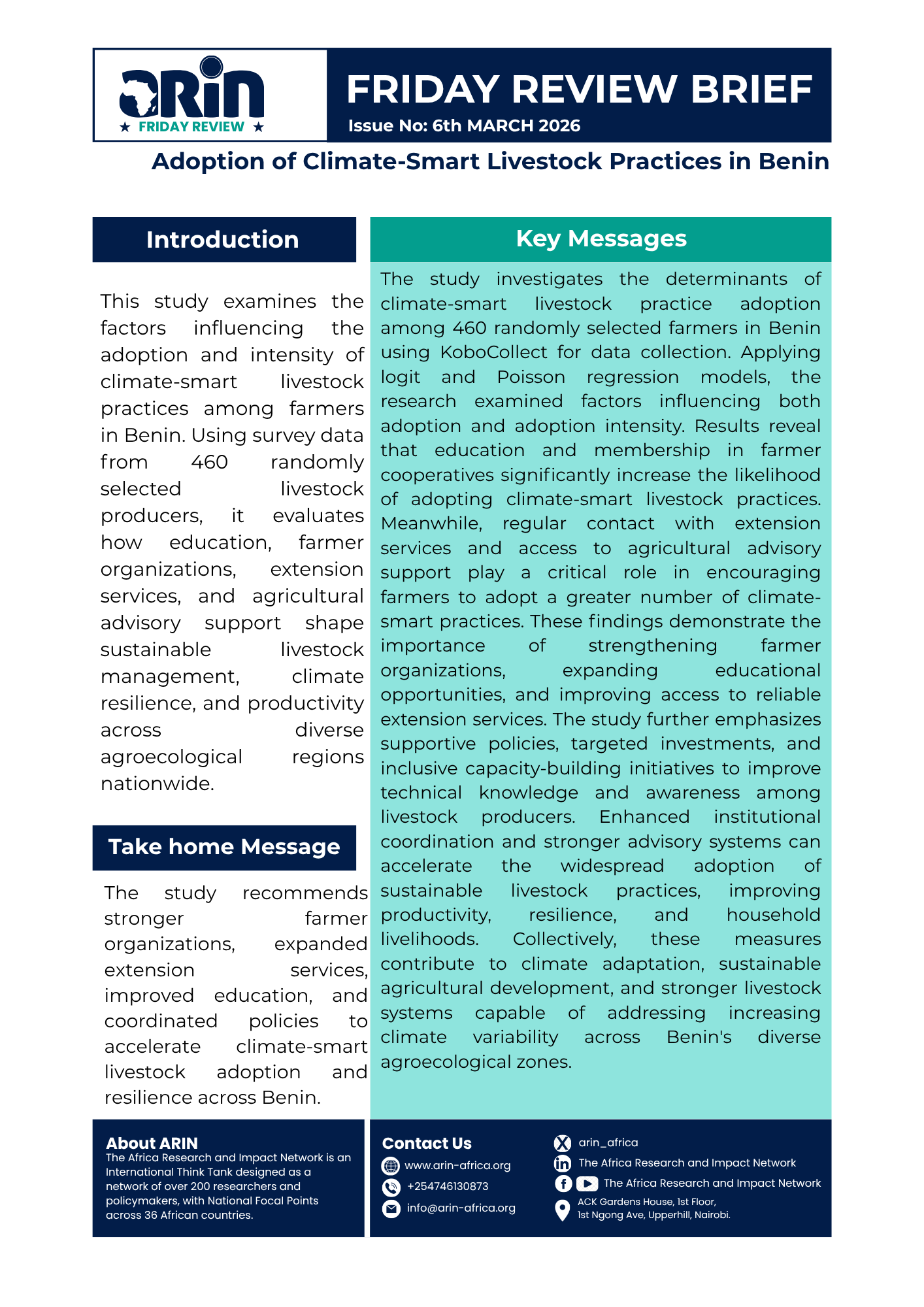
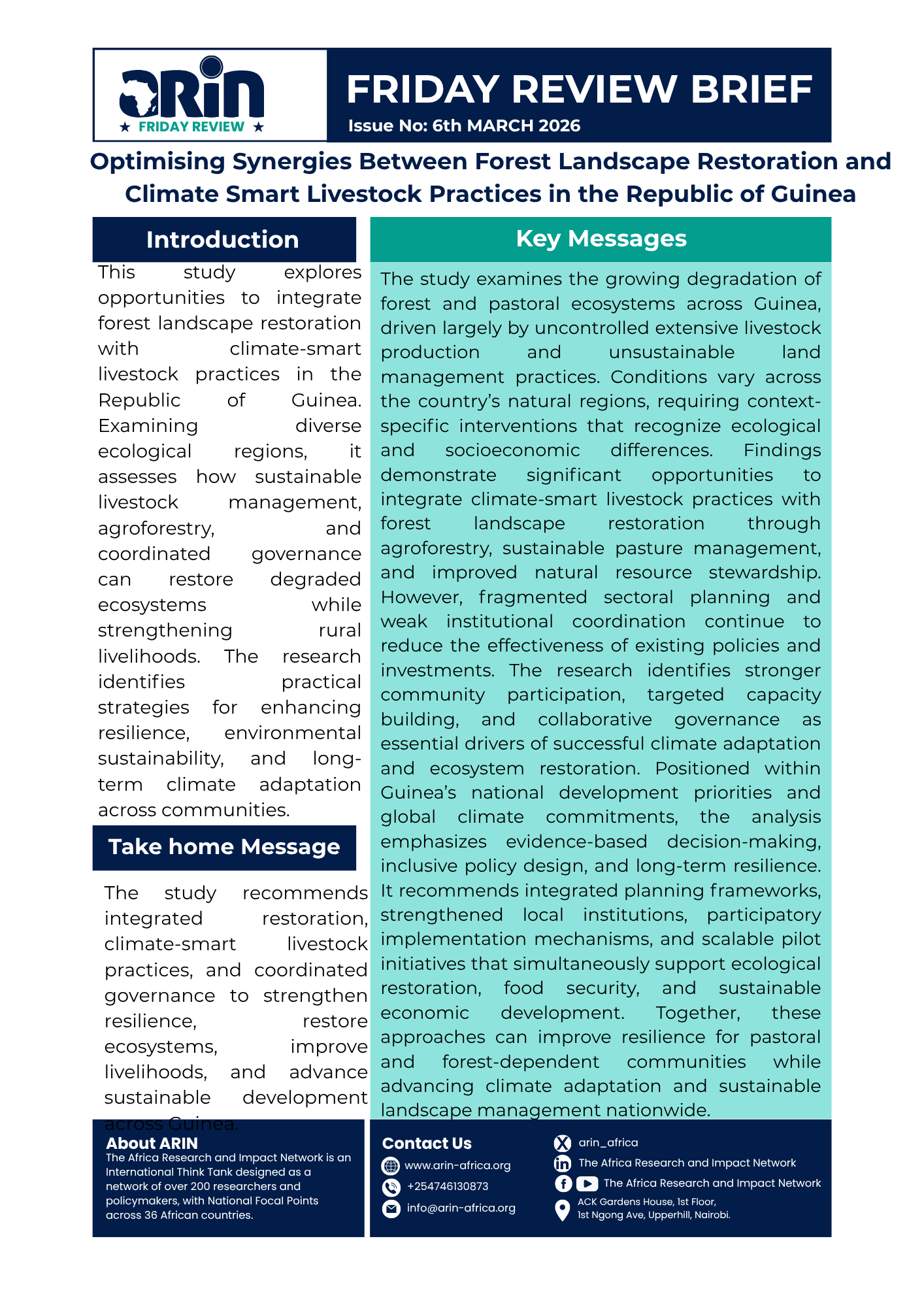
Optimising Synergies Between Forest Landscape Restoration and Climate Smart Livestock Practices in the Republic of Guinea
Assesses opportunities to integrate forest landscape restoration with climate-smart livestock practices in Guinea, demonstrating significant potential to restore degraded ecosystems and strengthen rural livelihoods through inclusive governance.
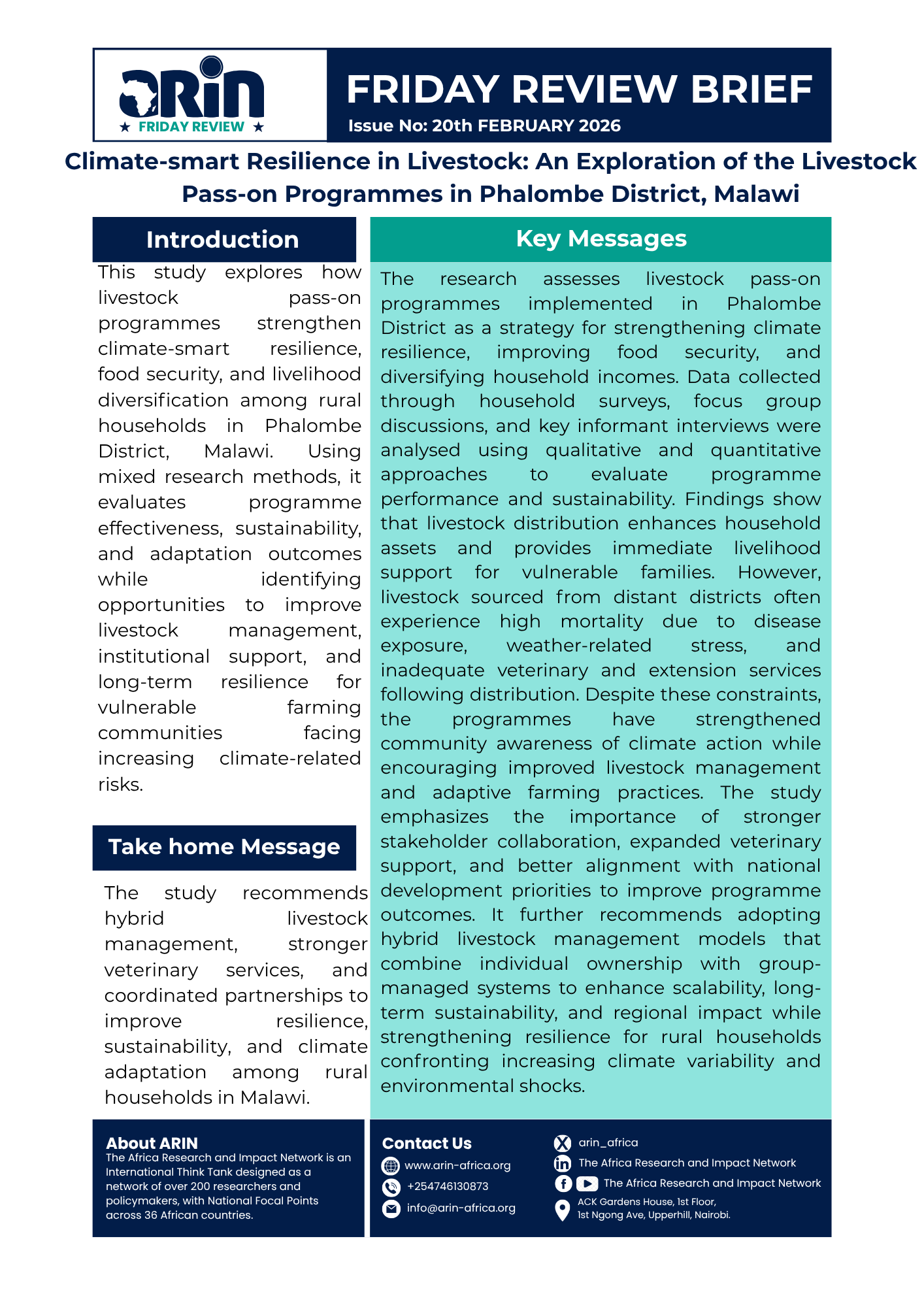
Climate-smart Resilience in Livestock: An Exploration of the Livestock Pass-on Programmes in Phalombe District, Malawi (February 2026 Edition)
An expanded assessment of livestock pass-on programmes in Phalombe District, Malawi, demonstrating how hybrid livestock management and strengthened community awareness build durable climate resilience for rural households.